
Little Dickie Simmons
“He was acutely aware of the spark that was required to get people to address their health.”
BEFORE SOMEONE COMES at me for the title of this post let me make it abundantly clear those words are not my own.
They were actually crafted as a self-described idiom by the late fitness personality Richard Simmons.
And they found me last week when I happened to click on a newly released Diane Sawyer special about his life.
Full disclosure, when I chose it from the litany of “for you” recommendations in the Hulu app, I did not do so because it had to do with fitness. Quite the contrary, it was the title of the show – The Mystery of Richard Simmons – that hooked me.
Which was also what likely caused the algorithm to suggest it to my true-crime-junkie self.
If you were not aware, prior to his passing in 2024, Richard Simmons had gone into hiding for a decade, not to be seen by anyone and sparking a faction of conspiracy theories ranging from plausible to absurd.
So I hit play to glean insight into what happened.
But what I got was so much more.
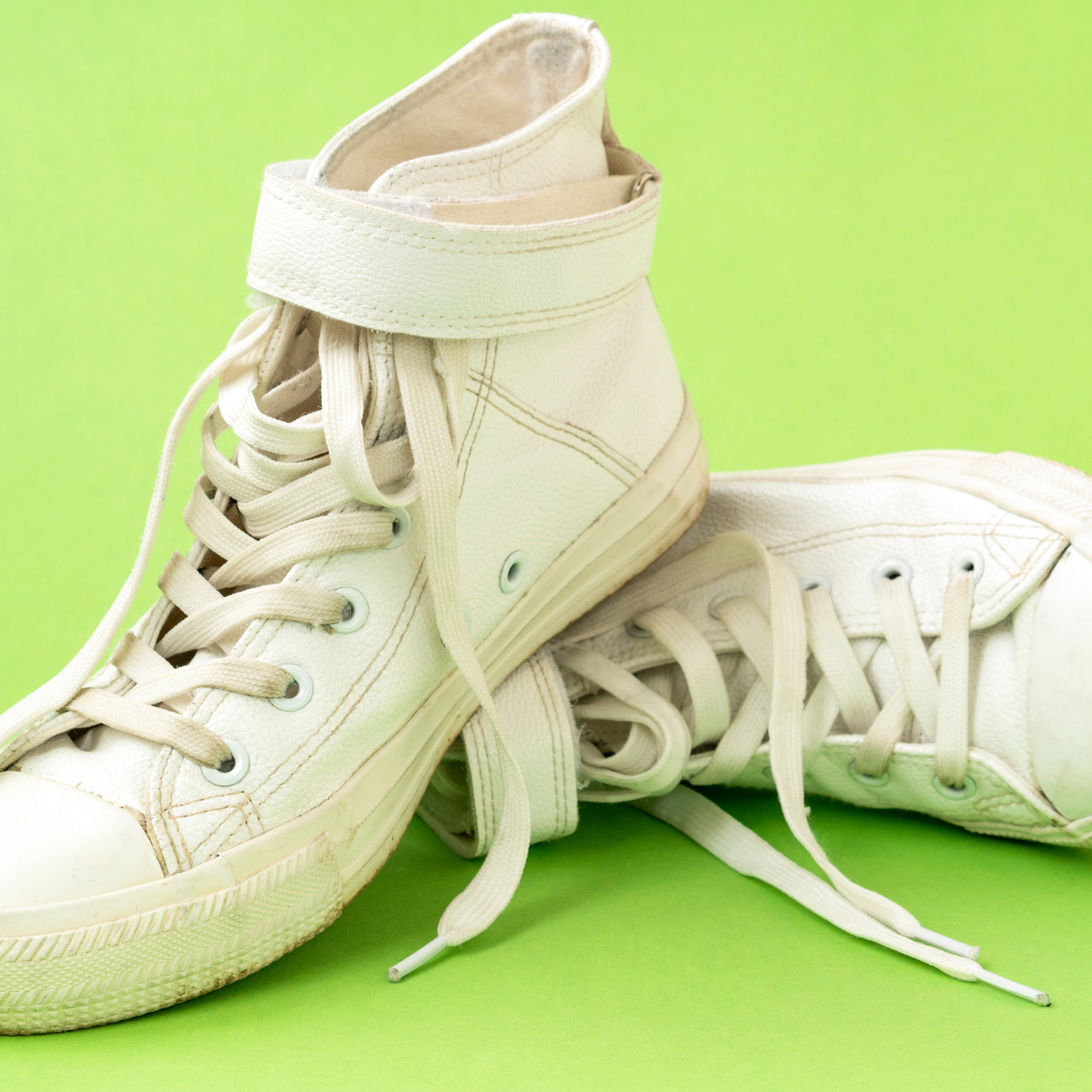
At only 40-minutes long the segment was less of a biography and more of a highlight reel of Simmons’ incredible rise to fame and the unmistakable impact he had on the world. And lest you think you knew the essence of this man (as I did) from his squealing voice, short shorts, high top sneakers and glittery tank tops, let me stop you right there and say that you – and I – were wrong.
While it might feel knee jerk to cringe at the thought of Sweatin’ to the Oldies – Simmons’ trademark aerobic method – there is no denying just how successful his empire was. From a monetary perspective, it has been quoted as amassing over $200 million in sales, a figure from the early 1980s that would be worth nearly a billion dollars today.
But he didn’t just make bank. He produced results.
As is impressively quoted in the segment, Simmons is credited with helping people lose a collective 3 million pounds, a figure I can’t imagine any other fitness system ever accomplishing, and one which therefore prompted Diane Sawyer to brilliantly refer to him as a “one-man Ozempic.”
That’s right: Before Oura rings, Whoop bands and Peloton bikes, what Richard Simmons did worked.
And that is why this is the part, Gang, where I admittedly get choked up.
Because nothing about Simmons’ success was haphazard. It was deliberate. As someone who had been subject to bullying due to his weight and had gone through the paces of transforming himself, he was acutely aware of the spark that was required to get people to address their health.
And that was love.
So he showered people with it unconditionally, building a community where in malls and living rooms across America every body (quite literally) felt like they belonged.
Then without a single piece of flashy equipment or a metric in sight he got them to move – consistently.
And he did that by making it fun.
This is why as I watched his boundless energy come through my TV I couldn’t help but think of just how far off track we’ve gotten in terms of wellbeing — and how the modern wellness industry gets things so terribly wrong.
That we’ve made movement so intense and complicated that people feel intimidated by what to do and when to do it, when it’s really as easy as rockin’ around the clock.
And how, above all, we’ve lost scope of the fact that telling someone you believe in them is more powerful than any drug.
But perhaps the most heartbreaking takeaway is the impact the fitness industry would come to have on Richard Simmons, a reality that prompted him to remark to his manager that despite after impacting so many people, he was still just “little insecure Dickie Simmons” underneath it all.
See, I’m sure many wanted to assume there was something scandalous to blame for his seemingly sudden disconnection, but it turns out the very sickness he aimed to address is what ultimately ailed him to a halt.
Acutely aware the industry was changing, he began to question his relevance. If he mattered. If he and his aging body still belonged.
And imagine if he felt that way – if he doubted that fitness still had a place for him – just how many think the same.
Especially those who are still trying to find the courage to get off the couch.
Personally, this is why I think we need Richard Simmons – and his vision – more than ever.
Because health is meant to be a celebration.
A focus on what you can do.
Not a mission of dissecting everything you (supposedly) can’t.
So next time you find yourself feeling daunted by the prospect of tending to your health, remember these wise words from Little Dickie Simmons:
“Number 1: Like yourself.
Number 2: You have to eat healthy.
And Number 3: You’ve got to squeeze your buns.”
***
Coming Up Next Week: The June Lineup
It’s time to get back to basics.
Like what you just read? Create a ripple effect by supporting and sharing the love.

Write them, think them, talk them. There is no right or wrong way to navigate these prompts. Except to go into them without judgment or expectation. Be curious. And honest. Have the courage to sit with yourself.
Look at your current relationship with fitness or movement. How much of it is driven by performance and “shoulds”— versus a genuine feeling of appreciation for what your body can do? If you stripped away every tracking device and metric tomorrow, would your movement still feel like it has a purpose?
Consider the places where you pursue your health, be it a studio, an app or even a spa. Do these environments make you feel seen and accepted exactly as you are, or do they feel like exclusive clubs where you have to look a certain way just to earn a seat at the table? Are you putting yourself in spaces that offer true belonging, or are you just trying to measure up?
In terms of your health, where have you allowed a complex, multi-step health philosophy to rob you of simple, intuitive fun? What is one area of your life where you can ditch the clinical protocols this week and just let movement, food, or rest be more relaxed and lighthearted? In other words, where can you afford to remove the rules?
Thank you for reading Lighten Up.