
Lessons from Palermo
“Suddenly, my eyes felt like they couldn’t unsee just how much was lacking from eating the American way.”
THERE WAS A time in my previous life when I worked as an editor for a grocery trade magazine, a job that unexpectedly served as a springboard for future iterations of my career.
Dubbed the resident health nut of the office – a title I was anointed simply because I hit the gym before the morning train and kept some curious, healthy snacks in my cubicle – I was assigned to create a new section for our magazine called “Selling Wellness.”
An apropos title if there ever was one.
While the exact year escapes me, this was somewhere in the late aughts (as the kids say) when traditional grocery stores were first incorporating “healthy” and “organic” sections into their assortment. My job was to help retailers understand why this sea change to caring about the quality of the food was more than just a trend (as evidenced to this day) and therefore guide them on how to present these new products to consumers.
There was the rainbow assortment of vegetables and legumes picked daily from the local market.
Fish – from sardines to swordfish – prepared in ways that make my tastebuds dance to this day.
And, my personal favorite, the ricotta cheese, churned – by hand – in a barrel and made from sheep’s milk so fresh it was still warm when it hit my lips.
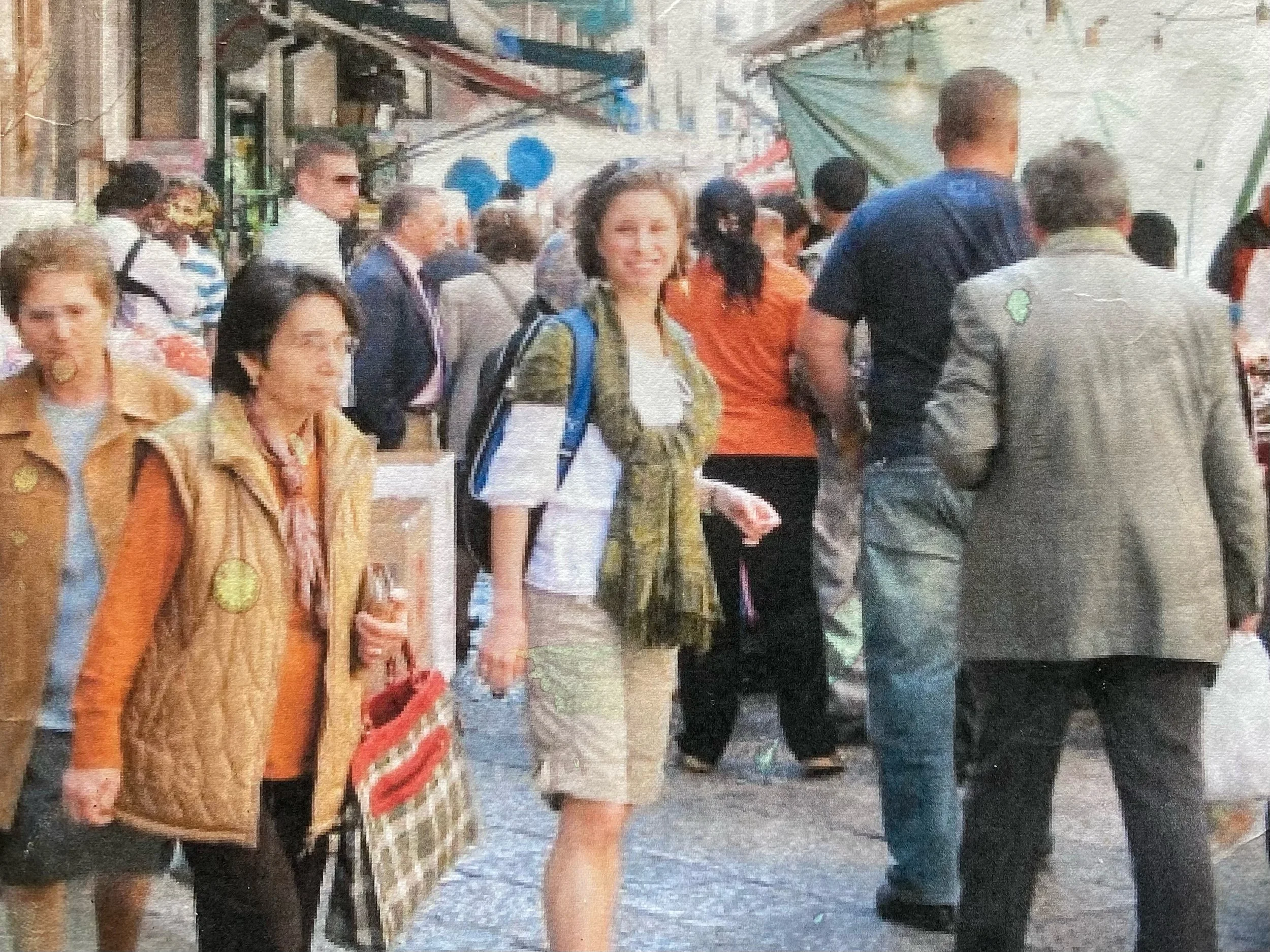
For starters, the vast majority of our eating happened outdoors, despite the weather conditions (sans rain, of course). Be it on an ornate patio overlooking the water or simply at a small sidewalk table, there was something about the omnipresence of fresh air that prompted you to breathe while you ate.
Then there was the fact that we actually sat for every meal – some stretching for as long as 2 hours in the middle of the day. But even the ones that were not multi-course affairs (the whole notion of small portions of different types of foods is at the heart of this diet’s success) involved eating deliberately with intention. Read: Actually savoring that cappuccino as opposed to sipping it haphazardly from a paper cup as you rush from point A to point B.
And finally, it was the absence of one thing in particular that I tried my damnedest to replicate when I got home that I felt was the unsung hero of the Mediterranean ethos – and that is that there was no technology in sight when meals were being shared. Keep in mind that this was during the days of my BlackBerry – i.e the infancy of smart phones – and my No. 1 takeaway then was just how present we actually were when we ate.
Kind of takes my breath away how unaware I was of the extent to which our devices would proliferate.
So, what did I learn from this once-in-a-lifetime trip to Sicily (and what I hope to impart to you with these musings)?
Good food – both in terms of taste and nutrition – is rarely complicated. This is why studying historic ways of eating is so important, because it reminds us that basics matter. Greatly. And how food is prepared – fresh, minimally processed, if at all – often matters most.
But it’s the state our bodies are in when we’re eating – relaxed, safe, surrounded by good company, not rushed – that may have the biggest influence on the impact our food does or does not have on our wellbeing.
Because you can sip on your green juice and eat your organic oats, but if you’re doing so while doom scrolling, answering emails or dodging traffic in the car, I’d argue the nutrition is lost.
Yet when we use our meals as an opportunity to slow down, to breathe, to connect – to others and ourselves – we stop just mindlessly processing our food.
And we finally give ourselves the chance to absorb it.
***
Coming Up Next Week: A Core Workout Like No Other
The therapeutic benefits of laughing ‘til it hurts.
Like what you just read? Create a ripple effect by supporting and sharing the love.

Write them, think them, talk them. There is no right or wrong way to navigate these prompts. Except to go into them without judgment or expectation. Be curious. And honest. Have the courage to sit with yourself.
Look back at your last three meals. Can you even remember them? If so, be curious about the state of your body while you were eating. Were you relaxed, breathing, and present — or were you eating while multitasking?
To that end, when was the last time you sat down for a meal with absolutely zero technology in sight? Did the absence of a screen allow you to connect more deeply, or did it trigger that modern, phantom urge to reach for a device?
We might not all be able to take a two-hour mid-day break on an ornate patio overlooking the Sicilian coast today, but what is one small way you can trade the “haphazard paper cup” mentality for a moment of actual, intentional savoring this week? May I suggest heaing outdoors — even if it’s for your morning cup of coffee.
Thank you for reading Lighten Up.